Si alguna vez viste un making of donde un actor famosísimo pelea en un estudio completamente verde contra un monstruo que todavía no existe, ya sabes de qué te voy a hablar. El monstruo y el paisaje se agregan meses después en el computador. Mientras tanto, el actor tiene que imaginarlo todo y el equipo de producción observa la escena con una sonrisa incómoda. Ese es justamente el problema que vino a resolver la Virtual Production con la técnica de ICVFX.
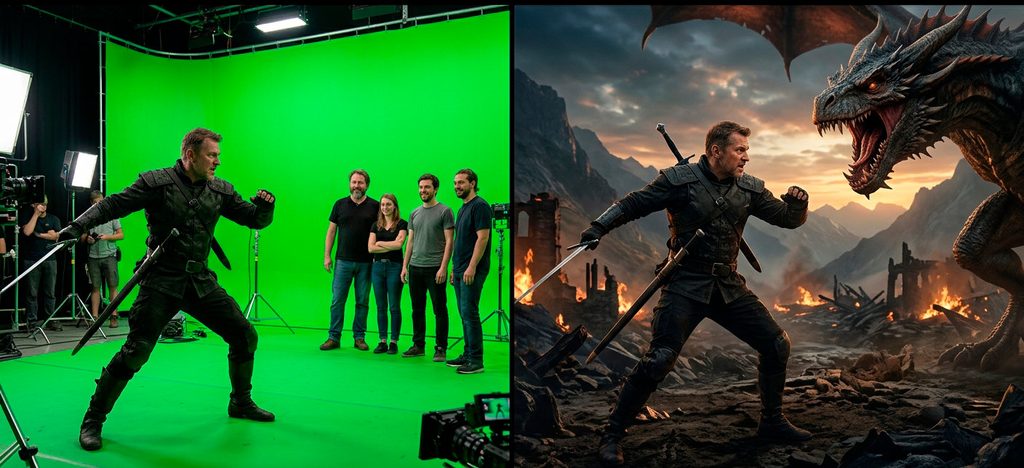
¡Adiós, pantalla verde!
Pero antes, un poco de historia…
Durante décadas, el croma ha sido una herramienta fundamental para crear escenarios y efectos visuales en el cine. Y funciona. El problema está en sus limitaciones:
- La luz no calza. La iluminación del escenario real no siempre coincide con la del entorno digital. Además, el verde puede reflejarse sobre la piel y el vestuario (spill), lo que exige correcciones en postproducción.
- Los actores actúan a ciegas. Tienen que imaginar el dragón, la ciudad o el océano con los que interactúan, sin contar con una referencia visual que les permita reaccionar de forma natural.
- El humo y las partículas complican el rodaje. Elementos como el humo, la niebla y las partículas suelen ser difíciles de integrar con naturalidad y, muchas veces, deben añadirse o corregirse durante la postproducción.
- Todo se decide después. Como los escenarios digitales se incorporan durante la postproducción, muchas decisiones visuales deben tomarse sin ver el resultado final. De ahí la famosa frase: «Lo arreglamos en post».
En la década de 2010 algunos cineastas empezaron a buscar la salida. En Gravity (2013) se usó un cubo de pantallas LED para iluminar a los actores con la luz «real» del espacio. En Rogue One (2016), una pantalla LED curva mostraba el salto al hiperespacio. Y en El Rey León (2019), Jon Favreau «filmó» una sabana digital usando un motor de videojuegos. Cada uno resolvía un pedacito del problema.
Faltaba juntarlo todo. Pantallas con calidad suficiente para ser filmadas directamente, un motor capaz de dibujar fondos realistas en tiempo real y un sistema que supiera en todo momento dónde estaba la cámara. Eso llegó en 2019, y llegó con casco.
The Mandalorian cambia las reglas.
En 2019 llegó The Mandalorian, la serie de Star Wars de Disney+, y con ella un gran salto tecnológico. Las pantallas LED ya no servían solo para iluminar a los actores. También mostraban los paisajes digitales que aparecerían directamente en cámara. Detrás de esta tecnología estaban Industrial Light & Magic (ILM), la compañía de efectos visuales de Lucasfilm, y Epic Games, creadora de Fortnite. Su motor gráfico, Unreal Engine, permitía generar y modificar esos entornos en tiempo real, durante el mismísimo rodaje.
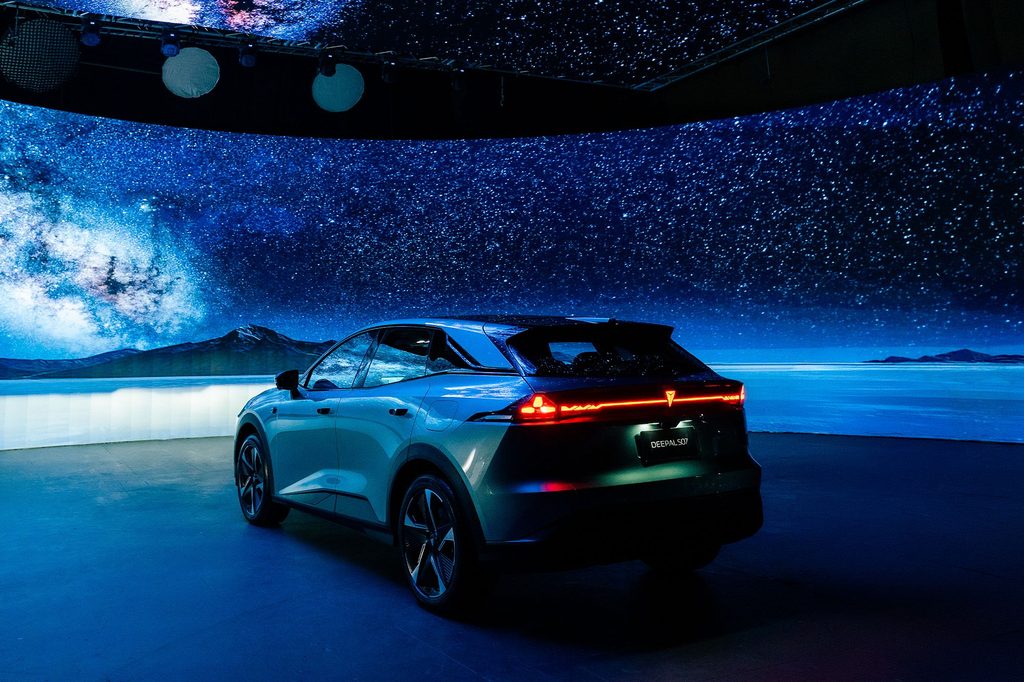
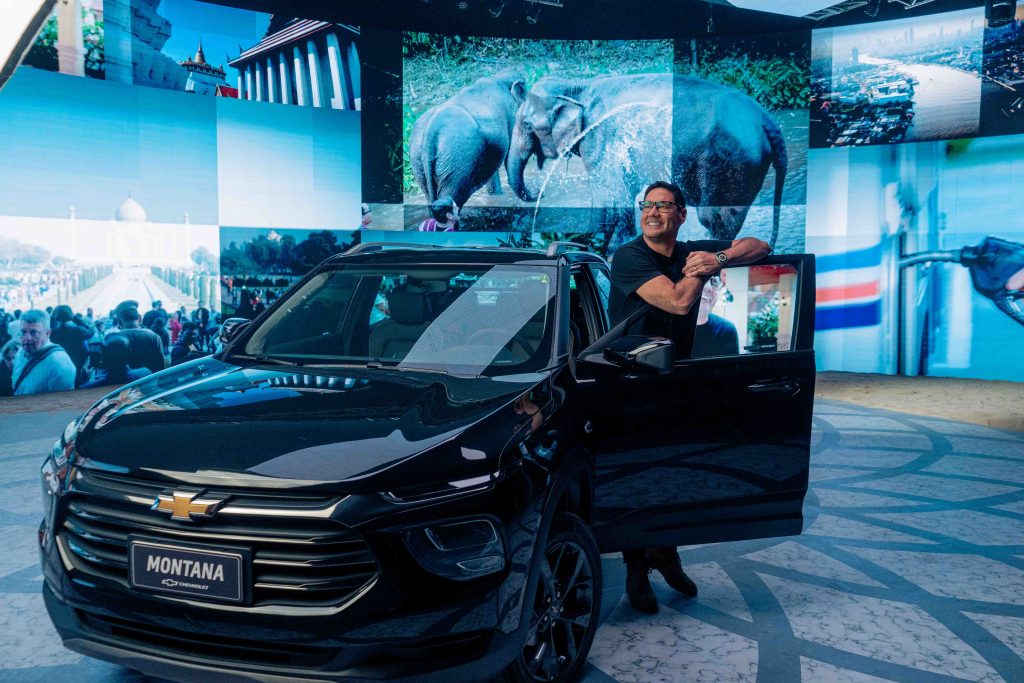
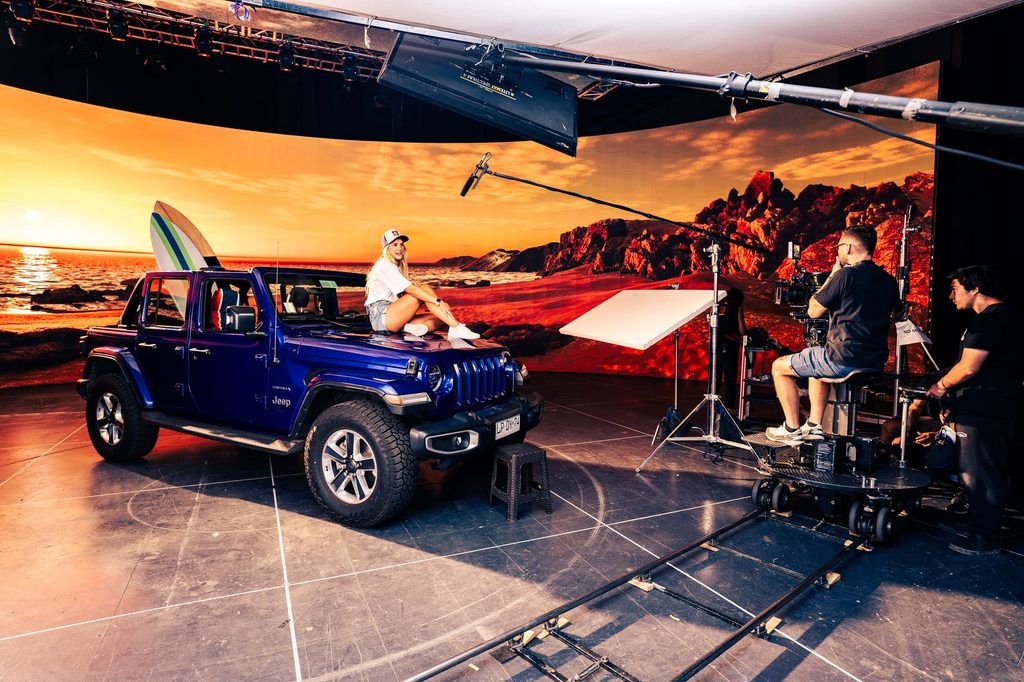
A este enfoque de producción se le conoce como Virtual Production. Y una de las tecnologías que lo hicieron posible fue el ICVFX (In-Camera Visual Effects), que permite capturar directamente en cámara a los actores junto con los entornos digitales que se proyectan en las pantallas LED, integrando ambos en la imagen final.
ICVFX significa In-Camera Visual Effects, que en español se traduce como efectos visuales integrados directamente en cámara.
¿Por qué este caso es tan buen ejemplo para entender los beneficios de esta tecnología? Por la armadura. Mando es, probablemente, el protagonista más reflectante de la galaxia. Con fondo verde, cada plano habría mostrado a un cazarrecompensas reflejando un estudio verde, y algún artista de VFX habría pasado sus noches borrándolo y corrigiendo cada reflejo. Con Virtual Production, en cambio, la armadura refleja con extraordinaria fidelidad el desierto, el espacio y el cielo que aparecen en las pantallas LED.
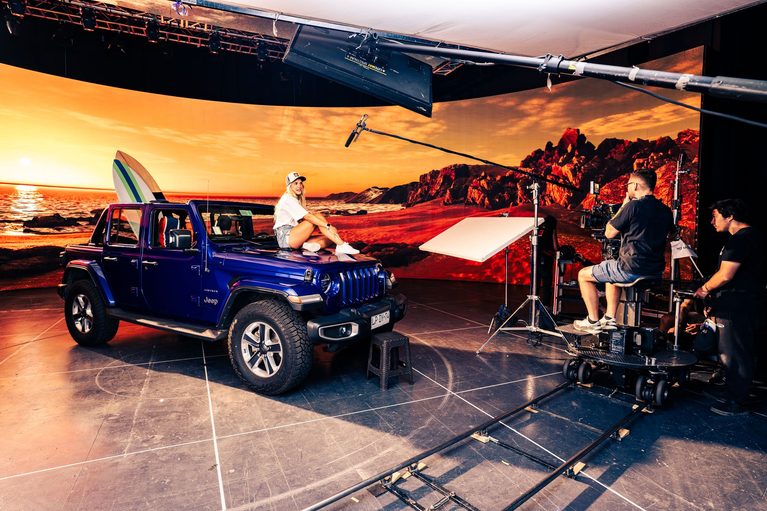
Esta ventaja también es clave al filmar automóviles, joyas o relojes, cuyas superficies reflejan constantemente el entorno. En Virtual Production, esos reflejos corresponden al escenario digital y aportan un realismo difícil de conseguir con un fondo verde.
COVID-19: cuando el cine tuvo que reinventarse para sobrevivir.
En 2020 el mundo se encerró y el cine también. Las fronteras cerraron, los rodajes se cancelaron y de pronto esa tecnología experimental de Star Wars se volvió un salvavidas. Los números hablan solos: según Epic Games, los escenarios de Virtual Production pasaron de unos 3 en 2019 a cerca de 300 en octubre de 2022. Es decir, se multiplicaron por cien en tres años, más rápido que la masa madre casera que trafica tu tía.
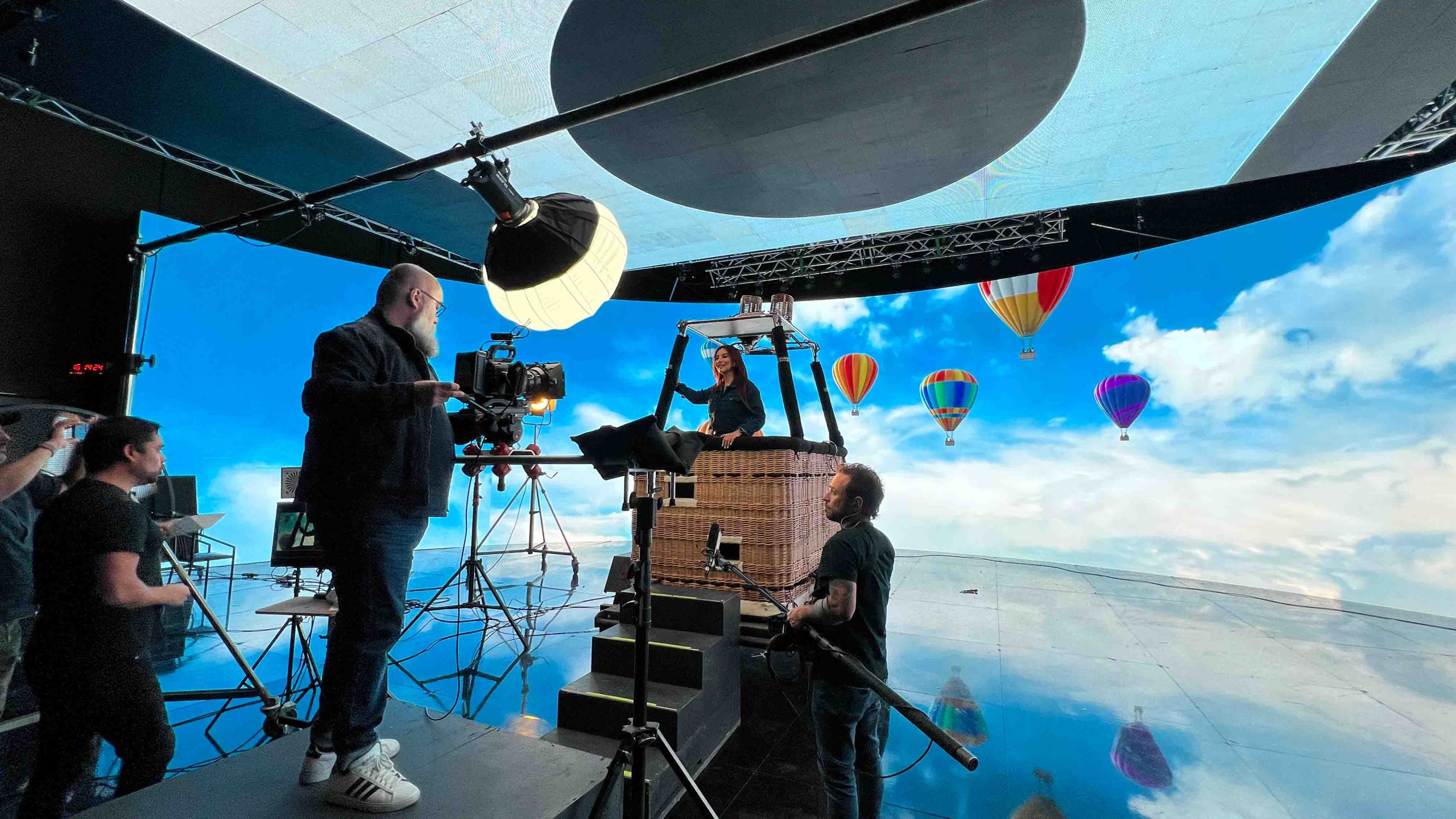
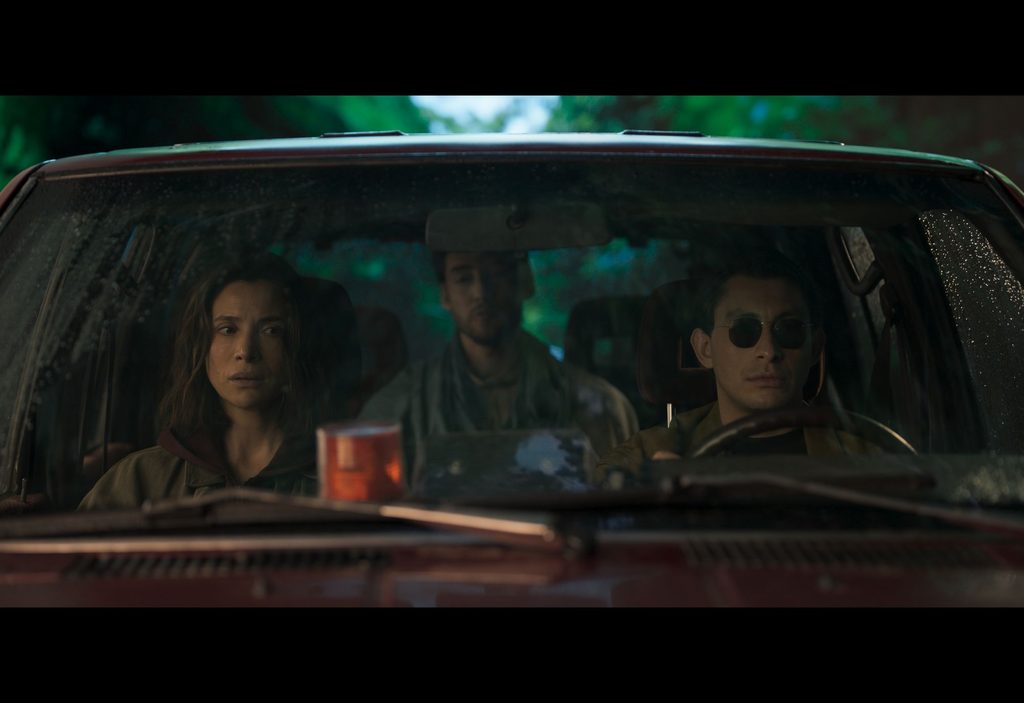
¿Y nosotros? En MADIS también nos subimos al carro, y bien adelante. En 2021, en plena pandemia, fuimos los primeros en Sudamérica en adoptar esta tecnología. Veníamos con más de 20 años de experiencia diseñando escenografías para canales de televisión y grandes espectáculos, así que explorar el mundo de la cinematografía de la mano con esta nueva tecnología fue un paso natural. Hoy contamos con un set de 800 m² al interior de TVN, con un muro LED curvo de 27 metros de largo por 7 de alto y un techo de pantallas sobre nuestras cabezas. En 2024, además, se produjo la primera película chilena hecha con virtual production ICVFX, para Amazon Studios.
Hasta aquí llega la primera parte de este viaje. Ya sabemos qué es la Virtual Production, por qué vino a jubilar a la pantalla verde y cómo la pandemia la puso en el mapa. Pero queda la pregunta del millón (o, siendo honestos, de varios millones): ¿con qué elementos tecnológicos debe que contar un estudio de Virtual Production? Eso lo veremos en la segunda parte de este artículo. No cambies de canal.
If you've ever seen a behind-the-scenes video where a famous actor fights a monster that doesn't yet exist in a completely green studio, you know what I'm talking about. The monster and the scenery are added months later on a computer. Meanwhile, the actor has to imagine it all, and the production team watches the scene with an awkward smile. That's precisely the problem that Virtual Production, with its ICVFX technique, came to solve.
Goodbye, green screen!
But first, a little history…
For decades, chroma keying has been a fundamental tool for creating sets and visual effects in film. And it works. The problem lies in its limitations:
- The lighting doesn't match. The lighting of the real set doesn't always match that of the digital environment. Furthermore, the green light can reflect off skin and clothing ( spill ), requiring corrections in post-production.
- The actors perform blindfolded. They have to imagine the dragon, the city, or the ocean they are interacting with, without any visual reference to help them react naturally.
- Smoke and particles complicate filming. Elements like smoke, fog, and particles are often difficult to integrate naturally and frequently need to be added or corrected during post-production.
- Everything is decided later. Since digital sets are incorporated during post-production, many visual decisions must be made without seeing the final result. Hence the famous phrase: "We'll fix it in post."
In the 2010s, some filmmakers began to explore solutions. In Gravity (2013) , a cube of LED screens was used to illuminate the actors with the "real" light of space. In Rogue One (2016) , a curved LED screen depicted the jump to hyperspace. And in The Lion King (2019) , Jon Favreau "filmed" a digital savanna using a video game engine. Each one solved a piece of the problem.
All that was missing was putting it all together. Screens high enough quality to be filmed directly, an engine capable of rendering realistic backgrounds in real time, and a system that knew the camera's location at all times. That arrived in 2019, and it came with a headset.
The Mandalorian changes the rules.
In 2019, The Mandalorian , the Star Wars series from Disney+, arrived, bringing with it a significant technological leap. LED screens were no longer just for lighting the actors. They also displayed the digital landscapes that would appear directly on camera. Behind this technology were Industrial Light & Magic (ILM), Lucasfilm's visual effects company, and Epic Games, creator of Fortnite . Their graphics engine, Unreal Engine, allowed them to generate and modify these environments in real time, during filming itself.
This production approach is known as Virtual Production . And one of the technologies that made it possible was ICVFX ( In-Camera Visual Effects ), which allows actors to be captured directly in camera along with the digital environments projected onto LED screens, integrating both into the final image.
ICVFX stands for In-Camera Visual Effects, which in Spanish translates as visual effects integrated directly into the camera.
Why is this case such a good example for understanding the benefits of this technology? Because of the armor . Mando is probably the most reflective protagonist in the galaxy. With a green screen, every shot would have shown a bounty hunter reflecting a green studio, and some VFX artist would have spent their nights erasing and correcting every reflection. With Virtual Production, however, the armor reflects the desert, space, and sky displayed on the LED screens with extraordinary fidelity.
This advantage is also key when filming cars , jewelry, or watches, whose surfaces constantly reflect the surroundings. In Virtual Production, these reflections correspond to the digital set and provide a realism difficult to achieve with a green screen.
COVID-19: When cinema had to reinvent itself to survive.
In 2020, the world shut down, and so did the film industry. Borders closed, filming was canceled, and suddenly that experimental Star Wars technology became a lifeline. The numbers speak for themselves: according to Epic Games, Virtual Production environments went from about 3 in 2019 to nearly 300 in October 2022. That's a hundredfold increase in three years, faster than the homemade sourdough starter your aunt sells.
And what about us? At MADIS , we jumped on the bandwagon too, and we were way ahead of the curve. In 2021, right in the middle of the pandemic, we were the first in South America to adopt this technology . We had over 20 years of experience designing sets for television channels and large-scale shows, so exploring the world of cinematography with this new technology was a natural step. Today, we have an 800 m² set inside TVN, with a curved LED wall 27 meters long by 7 meters high and a ceiling of screens overhead. Furthermore, in 2024, we produced the first Chilean film made with ICVFX virtual production for Amazon Studios.
This concludes the first part of our journey. We now know what Virtual Production is, why it's replacing green screens, and how the pandemic put it on the map. But the million-dollar question remains (or, to be honest, the multi-million-dollar question): what technological elements does a Virtual Production studio need? We'll explore that in the second part of this article. Stay tuned.
¿Tu próximo proyecto necesita tecnología o producción audiovisual?
Agendar una reunión →